.avif)

.avif)
.avif)




Matching the System to What Runs on the Floor
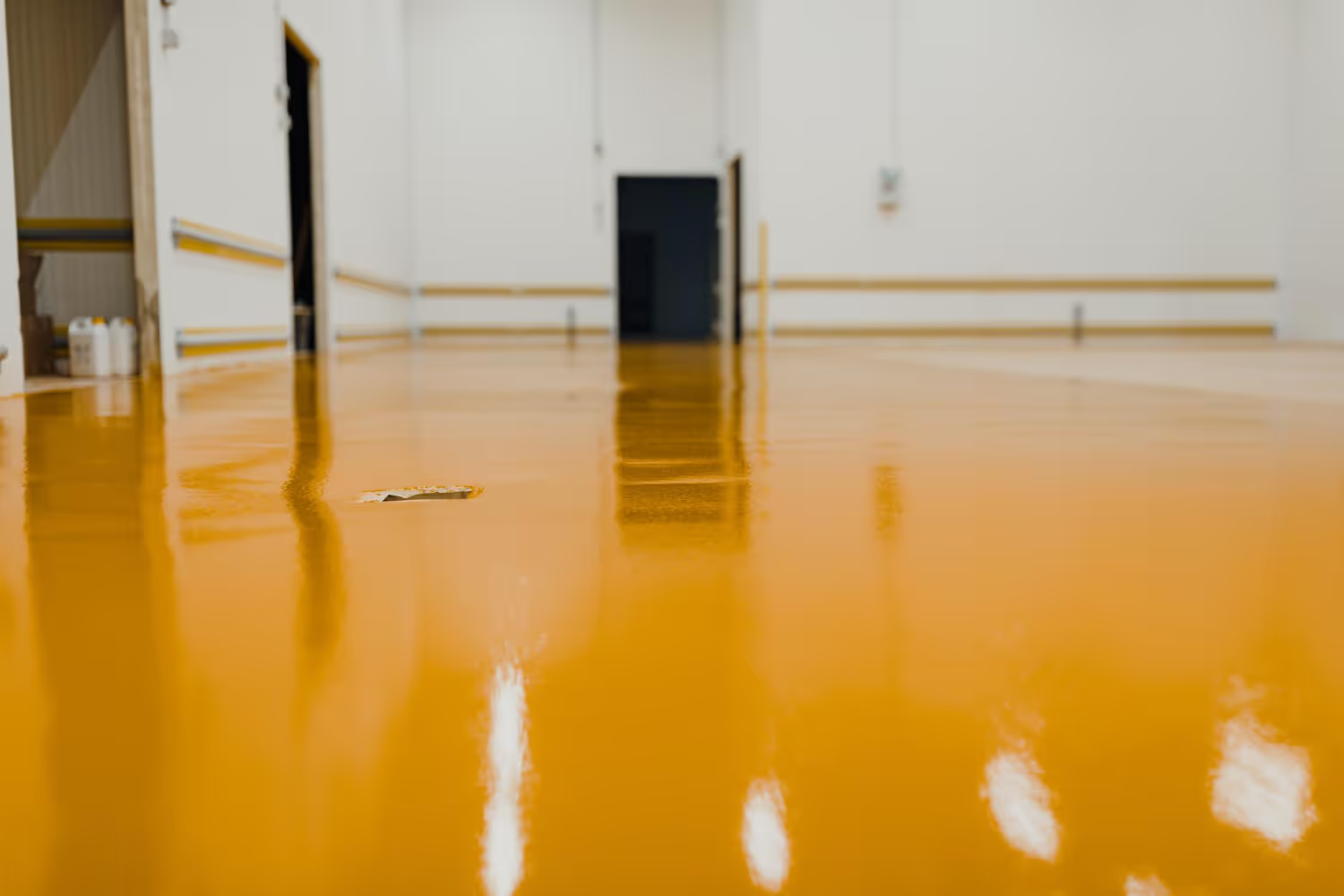
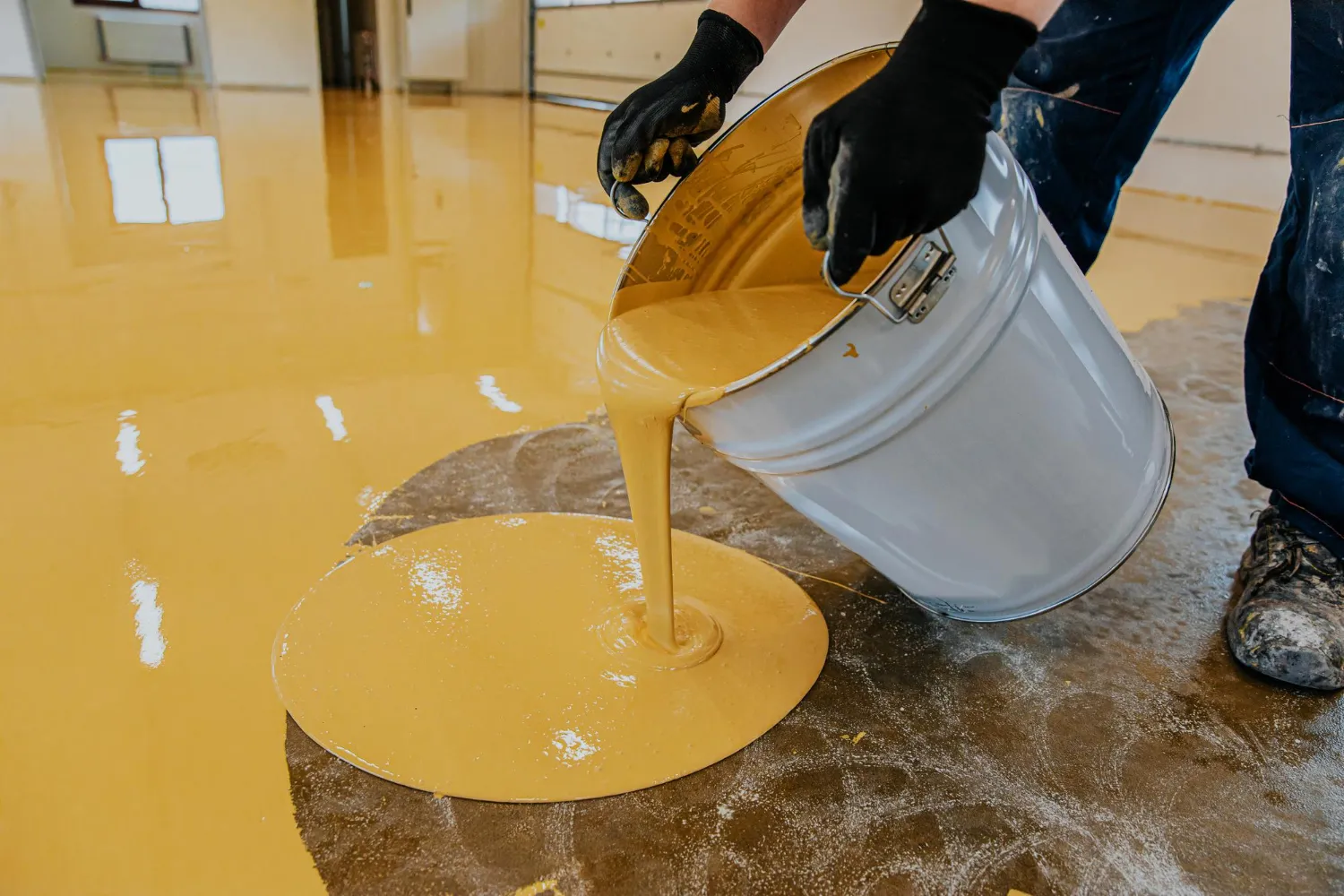
A floor taking foot traffic and a hand pallet jack is a different specification from one taking a counterbalance forklift all day. For most West Covina units we install a solid color epoxy at a heavy film build: seamless, easy to clean, and strong enough for racking and rubber-wheeled traffic. Where hard forklift wheels run all shift, or the floor sees heat, chemical spill or wash-down, we step up to urethane cement, a trowel-applied mortar that is many times thicker and far more forgiving of all three.
Hard polyurethane wheels concentrate their load into a small contact patch and will find any weakness in a coating, particularly where a truck turns on the spot. Racking legs do something else again: they put a static point load through a base plate into the slab, and a system too brittle around that plate will craze. So we ask what the building actually does before naming a floor. Where you need the unit back fastest we finish in polyaspartic, which takes traffic in hours rather than days.
.webp)
.webp)